Mostrando entradas con la etiqueta Inglés II. Mostrar todas las entradas

miércoles, 25 de mayo de 2022

Clase XI - Inglés 2º - 10 de mayo

 Ejercicios de repaso para el examen

1er Parcial

1.       Fill in the gaps with THERE IS/THERE ARE. The sentences can be affirmative, negative or interrogative

a.       ______________a child in the classroom

b.       _________________ some apples in the basket

c.       ________________ any people in the room

d.       ________________ any eggs in the fridge


2.       Fill in the gaps with the verb in brackets using PRESENT SIMPE

a.       Mary ______________ (work) in an office

b.       My parents ________________(live) in a flat.

c.       They _______________________ (not go) to the gym

d.       _________ she ___________ study English?


3.       ORDER the words to make sentences.

a.       often/She/in/library/studies/the _______________________________________

b.       don’t/cook/usually/Saturdays/on/We ___________________________________


4.       Fill in the gaps with a POSSESSIVE ADJECTIVE

a.       This is Antonio’s car. It is _________ car

b.       This is my parents’ house. It is _________ house.

c.       I have a dog. This is ___________ dog

d.       Elena has a lot of friends. They are _________ friends


5.       Write the DATES

a.       2nd May :

b.       20th Jun:

c.       6th Dec:

d.       31st Nov:


2º Parcial


6.       Fill in the gaps with the verb in brackets using PRESENT CONTINUOUS

a.       I ___________________ (play) video games right now

b.       My friends ________________ (dance) in a party at the moment

c.       Sheila ________________________ (not cook) dinner.

d.       _________ the children___________ (watch) TV now?


7.       Write the TIMES.

a.       5.15:

b.       3.30:

c.       12.00:

d.       7.55:


8.       Fill in the gaps with SOME, ANY, A or AN

a.       There is ________ elephant in the zoo

b.       There are ___________ dogs in the park

c.       Can you see ____________ birds in the sky?

d.       I want ________ new computer for my birthday


9.       Fill in the gaps with AT ON or IN

a.       The exam is ________June

b.       I go to the gym __________ Mondays

c.       The class starts __________ 4 o’clock

d.       She never watches TV ________ the mornings


10.   Write the correct form of the COMPARATIVE AND SUPERLATIVES


Comparative

Superlative

Tall


Expensive


Good


lunes, 9 de mayo de 2022

Clase X - Inglés 2º - 3 de mayo

 Los adjetivos comparativos. Comparative adjectives. Aprendemos a formar el comparativo de superioridad de los adjetivos:

  1. Short Adjectives. (Adjetivos cortos). Consideramos adjetivos cortos a aquellos que tienen una sílaba o a los que tengan dos sílabas y acaben en -y. Estos adjetivos forman el comparativo añadiendo -er 
Tall - Tall (alto - más alto)
Short - shorter (corto - más corto)
Big - bigger (grande - mayor) * Recuerda: consonant + vocal + consonante = se dobla la última consonante + er
Small - smaller (pequeño - más pequeño)
Nice - nicer (bonito - más bonito) *Recuerda: nice tiene dos sílabas, por su pronunciación /naiz/
Happy - happier (feliz - más feliz) *Recuerda: adj. acabados en -y, cambian -y por -i y añaden -er
Heavy - heavier (pesado - más pesado)

     2. Long Adjectives. (Adjetivos largos). Consideramos adjetivos largos a aquellos que tienen dos sílabas y no acaban en -y y a todos los que tengan más de dos sílabas. Estos adjetivos forman el comparativos poniendo delante la palabra more

Modern - more modern (moderno - más modern)
Expensive - more expensive (caro - más caro)
Comfortable - more comfortable (cómodo - más cómodo)
  • Superlativos.
    1.  Adjetivos cortos (los que tienen 1 sílaba o los que tienen 2 sílabas y acaban en -y). Éstos forman el superlativo con the + adjetivo+est   Ej. The tallest (el más alto) The biggest (el mayor) The happiest (el más feliz)
    2. Adjetivos largos. (los que tienen 2 sílabas y no acaban en -y, y los de 3 o 4 sílabas). Éstos forman el superlativo con the + most + adjetivo  Ej. The most intelligent (el más inteligente) The most modern (el más moderno)
    3. Adjetivos irregulares. 
    Good - Better - The best (Bueno, mejor, el mejor)
    Bad - Worse - The worst (Malo, peor, el peor)
    Far - Further - The furthest (Lejos, más lejos, el más lejano)

  • Practica. Realiza los ejercicios online de esta página


lunes, 25 de abril de 2022

Clase IX - Inglés 2º - 26 de abril

 Aprendemos el uso de las preposiciones AT, IN y ON


  • Como preposiciones de lugar. Las tres se pueden traducir en castellano por "en". La diferencia es que ON se suele usar para expresar que algo está "sobre una superficie". AT se suele usar para expresar que algo "está en un punto determinado" e IN, para expresar que algo está "dentro de un espacio"
atinon
En un puntoDentro de un espacioSobre una superficie
at the cornerin the gardenon the wall
at the bus stopin Londonon the ceiling
at the doorin Franceon the door
at the top of the pagein a boxon the cover
at the end of the roadin my pocketon the floor
at the entrancein my walleton the carpet
at the crossroadsin a buildingon the menu
at the front deskin a caron a page
También hay que recordar que estas tres preposiciones se usan en expresiones fijas:
atinon
at homein a caron a bus
at workin a taxion a train
at schoolin a helicopteron a plane
at universityin a boaton a ship
at collegein a lift (elevator)on a bicycle, on a motorbike
at the topin the newspaperon a horse, on an elephant
at the bottomin the skyon the radio, on television
at the sidein a rowon the left, on the right
at receptionin Oxford Streeton the way

  • Como preposiciones de tiempo
At - Se usa con momentos específicos, en general

- Con las horas (At five o'clock)
- Con los periodos festivos (at Christmas)
- Con el fin de semana (At the weekend)

On - Se usa con días y fechas, en general

- On Tuesday - El martes
- On the 21st of October - El 21 de octubre
- On New Year Day - En año nuevo

In - Se usa con periodos de tiempo menos específicos.

- In May - En mayo
- In 2009 - En 2009
- In the 20th century - En el siglo XX
- In the morning, - Por la mañana


En las tareas y exámenes te encontraras este tipo de ejercicio:

 Write the prepositions of time AT / IN / ON.  Escribe las preposiciones de tiempo.  

  1. Helen comes ________________  20th December

  2. They get up _____________________ 6.30. 

  3. I usually go swimming _______________ Summer 

  4. She studies History ________________ University.

  5. There is a man ____________ the bus stop.

  6. Sarah goes to London________________ weekends

  7. The final exams are _____________ June.

  8. I meet my friends ___________ Saturdays

  9. She always visits her family ___________ Christmas


martes, 19 de abril de 2022

Clase VIII - Inglés 2º - 19 abril

  -Explicamos la diferencia entre nombres contables e incontables y el uso de, some/any/no, much/many/a lot of y how much/how many:


  • Countable and uncountable nouns. 
Los nombres contables son aquéllos que se pueden contar y pueden ir en singular o plural.

Boy/boys, car/cars, house/houses, person/people

Los nombres incontables son aquéllos que no se pueden contar y sólo aparecen en singular
salt / water / cheese / milk

Los nombres de alimentos que se suelen comer en porciones, normalmente, son incontables en inglés, aunque en castellano sí se pueden contar:
ham (jamón)/cheese (queso)/bread (pan)/ice-cream (helado)
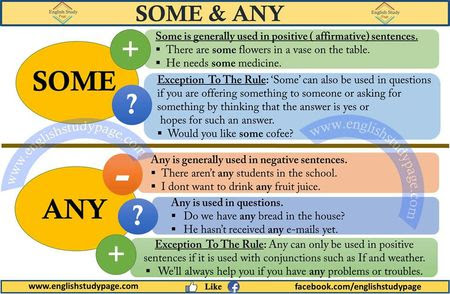
  • SOME / ANY (unos, unas o, a veces, no se traducen) Se usan delante de nombres contables en plural o de nombres incontables. SOME, en frases afirmativas;(EN ALGUNAS PREGUNTAS QUE IMPLICAN UNA INVITACIÓN TAMBIEN SE USA SOME) ANY, en frases negativas e interrogativas
I've got some money / I haven't got any money / Have you got any money?
There are some apples / There aren't any apples / Are there any apples?
Would you like some water? (invitación)

  • Much/Many/A lot of (muchos) - Much se use con nombres incontables y many con numbers contables y a menudo ambos se usan en frases negativas.
          A lot of se usa con contables y con incontables y, a menudo, en frases           afirmativas e interrogativas.
She has a lot of money // She hasn't got much money
I saw a lot of different animals // I didn't see many animals
  • HOW MANY/ HOW MUCH. Estos dos interrogativos significan "cuánto/s". HOW MUCH se us a con nombres incontables y HOW MANY con nombres contables.
How many children are there? // How much sugar is there?

Practica: some/any/


Practica:
- Fill in the gaps with SOME, ANY 
  • Mary doesn't like _________ sports
  • There isn't _________ people in the queue 
  • There were ________ people at the bus stop
  • Would you like ________ice-cream?
  • Are there _________ fruit in the fridge?

martes, 5 de abril de 2022

Clase VII - Inglés 2º - 5 de abril


    • PRESENT CONTINUOUS
    Affirmative (Suj + verb to be + verb+ing) - Pincha el enlace si no sabes conjugar el verbo to be
    I am working
    You are working
    He is working
    She is working
    It is working
    We are working
    You are working
    They are working
    Negative (Suje + verb to be + not + verb+ing) - Recuerda que el verbo to be en negativa suele aparecer contraído.
    I'm not working
    You aren't working
    He isn't working
    She isn't working
    It isn't working
    We aren't working
    You aren't working
    They aren't working
    Interrogative (Verbo to be + suj + verb+ing)
    Am I working?
    Are you working?
    Is he working?
    Is she working?
    Is it working?
    Are we working?
    Are you working?
    Are they working?
    • Uso del Present Continuous: usamos este tiempo para expresar acciones que están ocurriendo ahora mismo.
    • Expresiones de tiempo que acompañan al Present Continuous.
    - Now (ahora)
    - Right now (ahora mismo)
    - At the moment (en este moment)
    Ej. Sarah is cooking dinner now // They are watching TV right now // We are havingbreakfast at the moment

    * Cómo añadir -ing a los verbos:
  • La mayoría de los verbos añaden -ing sin que se observen cambios, (incluidos todos los verbos que acaban en -y). watch-watching // buy-buying // study-studying
  • Los verbos que acaban en -e, quitan la -e y añaden -ing. Have-having // dance-dancing
  • Los verbos que acaban en consonante+vocal+consonante, al añadir -ing, doblan la última consonante. Sit-sitting // swim-swimming // Clip-clipping
  • Los verbos acabados en -ie, cambian -ie por -y y añaden -ing. Die-dying//lie-lying

martes, 29 de marzo de 2022

Clase VI - Inglés 2º - 29 de marzo

 Construcciones con el verbo LIKE


El verbo LIKE (y otros verbos que expresan nuestras preferencias como HATE / LOVE/ DON'T MIND) siempre van seguidos:

- o bien de un nombre
- o bien de un verbo acabado en +ING

I like animals (like + noun)
I like dancing (like + verb-ing)

- Escribe frases afirmativas, negativas o interrogativas uniendo estos conceptos con el verbo LIKE

Ej. Cats/milk - Cats like milk

- Children/sweets
- Old people/noise
- Dogs/cats
-You/ fish?
-Fish/swim?
-You/run
-Your father/listen to the radio


lunes, 21 de marzo de 2022

Clase V - Inglés 2º - 22 marzo

 Aprende bien los meses del año:


Inglés
Español
JanuaryEnero
FebruaryFebrero
MarchMarzo
AprilAbril
MayMayo
JuneJunio
JulyJulio
AugustAgosto
SeptemberSeptiembre
OctoberOctubre
NovemberNoviembre
DecemberDiciembre


Aprende también las estaciones del año:

Inglés
Español
SpringPrimavera
SummerVerano
AutumnOtoño
WinterInvierno


Aprende ahora lo que es el Genitivo Sajón:
-Para hablar de las cosas de María debes poner su nombre primero

Mary
Seguido de una coma alta,llamada apostrofe.
Mary'
y la Ese
Mary's
Luego ponemos el objeto poseído.
Es fácil mira estos ejemplos.
Mary's bike
La bici de María
Mary's toys
Los juguetes de María
Mary's brothers
Los hermanos de María
 Si los poseedores son dos, sólo el último lleva apostrofe.
 Si los dueños son mas de uno (es decir en plural) y terminan en s ,el apostrofe se queda solo.
My friends' car
El coche de mis amigos
The boys' mother
La madre de los chicos
His brothers'lorry
El camión de sus hermanos
 Si el plural no termina en s,se hace el genitivo sajón de la manera habitual.
The men's books
Los libros de los hombres
The women's bikes
Las bicicletas de las mujeres
The children's toys
Los juguetes de los niños
 Algunos nombres propios que terminan en "S",Suelen añadir otra "S" después del apostrofe.Aunque también es frecuente la otra forma con el apostrofe sólo.
Charles's shirt
La camisa de Charles
Andres's sister
La hermana de Andrés
Andres' sister
La hermana de Andrés
 Realiza este ejercicio

miércoles, 16 de marzo de 2022

Clase IV - Inglés 2º - 15 marzo

Present Simple
Forma Afirmativa (Suj + verbo) (En 3ª pers. sing., añadir -s al verbo)

I work
You work
He works
She works
It works
We work
You work
They work

* Reglas para añadir -s a la 3ª persona del singular en los verbos:
1. La mayoría de los verbos añaden una -s sin que haya cambios
work--works // live--lives
2. Los verbos acabados en -o, -ss, -ch, sh ó x, añaden -es
wash--washes // watch-watches // do--does
3. Los verbos acabados en consonante + y, cambian la -y por -i y añaden -es
study--studies
4. Los verbos acabados en vocal+y, añaden -s sin que haya ningún cambio.
buy-- buys
5. El verbo have en tercera persona del singular cambia a has

Forma negativa (Suj+ don't + verbo) (En 3ª pers. sing. suj+ doesn't + verbo)

I don't work
You don't work
He doesn't work
She doesn't work
It doesn't work
We don't work
You don't work
They don't work

Forma interrogativa  (Do+suj. +verb) (En 3ª pers.sing., does + suj + verbo)

Do I work?
Do you work?
Does he work?
Does she work?
Does it work?
Do we work?
Do you work?
Do they work?


  • Ejercicios on-line: 1, 2


  • Uso del Present Simple: usamos el Present Simple para expresar acciones habituales, que ocurren con asiduidad. 
Ej. We go to work every morning // I study English on Tuesdays and Fridays // Sheusually watches TV in the evenings
  • Expresiones de tiempo que acompañan al Present Simple: todas aquellas que expresan asiduidad.
- Every morning (todas las mañanas)
- Everyday (todos los días)
- On Mondays (los lunes)
- In the evenings (por las tardes)
- Con los adverbios de frecuencia.

* Adverbios de frecuencia. Estos adverbios también denotan que una acción se hace con cierta asiduidad, denotan la frecuencia con la que algo sucede. Debes recordar que se colocan entre el sujeto y el verbo. Los más importantes son:
-Always (siempre)
-Usually (normalmente)
-Often (a menudo)
-Sometimes (a veces)
-Never (nunca)
Ej. She never studies hard // We always go to the gym in the mornings
Si usamos estos adverbios con el verbo ser (to be), el adverbio se coloca detrás del verbo
Ej. She is never at home / He is sometimes a bit rude


viernes, 18 de febrero de 2022

Clase II - Inglés 2º - 22 febrero

 El verbo CAN

El verbo CAN es uno de los verbos llamados "modales" en inglés.

Esto quiere decir que tiene unas determinadas características:

- Aporta al verbo que lo acompaña un significado a modo de perífrasis; en el caso de CAN, a veces lo traduciremos por ¨poder", otras por "saber".

Fíjate en estos ejemplos:

- I can speak 3 languages (Sé hablar 3 idiomas) - Expresa una HABILIDAD

- Mary can ride a horse (Mary sabe montar a caballo) - Expresa una HABILIDAD

- Can I come in?  (¿Puedo entrar?) - (Pide PERMISO)

 - Los verbos modales, además no añaden -s en la tercera persona del singular del presente como el resto de los verbos.

- Alice can cook sushi (Alice sabe hacer sushi) (Alice cans cook sushi)

- Estos verbos, tampoco necesitan auxiliar DO o DON'T para hacer preguntas o negar

- Can you open the window please? (¿Puedes abrir la ventana, por favor)

- Peter can't do the exercise (Peter no sabe hacer el ejercicio)

Vamos a conjugar el verbo CAN en sus tres formas para que veas qué sencillo es.

(Sé cocinar, sabes cocinar..., etc)

I can cook                I can't cook                Can I cook?

you can cook           You can't cook           Can you cook?

He can cook            He can't cook             Can he cook?

She can cook           She can't cook            Can she cook?

We can cook            We can't cook            Can we cook?

They can cook        They can't cook           Can they cook?


Un ejercicio que te puedes encontrar en las tareas y exámenes puede ser este:

- Write in negative and interrogative these 2 sentences (escribe en negativa e interrogativa estas dos frases)

John can speak Japanese

Negative: ___________________

Interrogative: _______________


They can swim very fast

Negative: _____________________

Interrogative: __________________


Vocabulary: acciones habituales (click on the photo to enlarge) 


Clase XII - Inglés 3º - 18 de mayo

 Ejercicios de repaso para el examen de inglés de 3º PRIMER PARCIAL   1.- FILL IN THE BLANKS WITH THE VERBS IN BRACKETS. USE THE PRE...