martes, 1 de marzo de 2022

Clase III - Inglés 3º - 2 de marzo

  Una vez que hayas practicado y estudiado la forma del Present Simple y la del Present Continuous de las clases anteriores, recuerda que los ejercicios de tareas y exámenes que te puedes encontrar en este módulo de 3º son los referidos a que demuestres bien cuando se usa uno y otro.

Vamos a tratar de recordarlo:

- El Present Simple se usa para expresar acciones que ocurren habitualmente. Sabremos distinguirlo por las expresiones de tiempo que nos encontraremos en la frase:

Expresiones de tiempo que salen en frases de Present Simple:

- At  5 o'clock (A las 5)

-In the evenings (por las tardes)

-In the mornings (por las mañanas)

-On Tuesdays (los martes)

-Everyday (todos los días)

-Every month (todos los meses)

-Todos los adverbios de frecuencia que aprendimos en la clase I (always, usually, often, sometimes, hardly ever, never) - (siempre, normalmente, a menudo, a veces, casi nunca, nunca)

- El Present Conituous se usa para expresar acciones que están ocurriendo en este momento en el que estamos hablando. También sabremos distinguirlo por las expresiones de tiempo que encontraremos en la frase:

Expresiones de tiempo que salen en frases de Present Contiuous:

- Now (ahora)

- Right now (ahora mismo)

-At the moment (en este momento)

El tipo de ejercicio que os encontraréis será este:

Fill in the gaps with the verb in brackets. Use PRESENT SIMPLE or PRESENT CONTINUOUS

  • Mary __________ (go) to the supermarket on Fridays.
  • They usually ___________ (eat) fish
  • Now I _____________ (work) in that project
  • We ___________ (have) dinner right now.
  • _______ you _________ (watch) at the moment?
  • Robert ______________ (do) yoga on Tuesdays
  • She ____________(get up) at 8 in the morning


martes, 22 de febrero de 2022

Clase II - Inglés 3º - 23 febrero

 PRESENT CONTINUOUS

Affirmative (Suj + verb to be + verb+ing) - Pincha el enlace si no sabes conjugar el verbo to be
I am working
You are working
He is working
She is working
It is working
We are working
You are working
They are working
Negative (Suje + verb to be + not + verb+ing) - Recuerda que el verbo to be en negativa suele aparecer contraído.
I'm not working
You aren't working
He isn't working
She isn't working
It isn't working
We aren't working
You aren't working
They aren't working
Interrogative (Verbo to be + suj + verb+ing)
Am I working?
Are you working?
Is he working?
Is she working?
Is it working?
Are we working?
Are you working?
Are they working?
  • Uso del Present Continuous: usamos este tiempo para expresar acciones que están ocurriendo ahora mismo.
  • Expresiones de tiempo que acompañan al Present Continuous.
- Now (ahora)
- Right now (ahora mismo)
- At the moment (en este moment)
Ej. Sarah is cooking dinner now // They are watching TV right now // We are havingbreakfast at the moment

* Cómo añadir -ing a los verbos:
  1. La mayoría de los verbos añaden -ing sin que se observen cambios, (incluidos todos los verbos que acaban en -y). watch-watching // buy-buying // study-studying
  2. Los verbos que acaban en -e, quitan la -e y añaden -ing. Have-having // dance-dancing
  3. Los verbos que acaban en consonante+vocal+consonante, al añadir -ing, doblan la última consonante. Sit-sitting // swim-swimming // Clip-clipping
  4. Los verbos acabados en -ie, cambian -ie por -y y añaden -ing. Die-dying//lie-lying

viernes, 18 de febrero de 2022

Clase II - Inglés 2º - 22 febrero

 El verbo CAN

El verbo CAN es uno de los verbos llamados "modales" en inglés.

Esto quiere decir que tiene unas determinadas características:

- Aporta al verbo que lo acompaña un significado a modo de perífrasis; en el caso de CAN, a veces lo traduciremos por ¨poder", otras por "saber".

Fíjate en estos ejemplos:

- I can speak 3 languages (Sé hablar 3 idiomas) - Expresa una HABILIDAD

- Mary can ride a horse (Mary sabe montar a caballo) - Expresa una HABILIDAD

- Can I come in?  (¿Puedo entrar?) - (Pide PERMISO)

 - Los verbos modales, además no añaden -s en la tercera persona del singular del presente como el resto de los verbos.

- Alice can cook sushi (Alice sabe hacer sushi) (Alice cans cook sushi)

- Estos verbos, tampoco necesitan auxiliar DO o DON'T para hacer preguntas o negar

- Can you open the window please? (¿Puedes abrir la ventana, por favor)

- Peter can't do the exercise (Peter no sabe hacer el ejercicio)

Vamos a conjugar el verbo CAN en sus tres formas para que veas qué sencillo es.

(Sé cocinar, sabes cocinar..., etc)

I can cook                I can't cook                Can I cook?

you can cook           You can't cook           Can you cook?

He can cook            He can't cook             Can he cook?

She can cook           She can't cook            Can she cook?

We can cook            We can't cook            Can we cook?

They can cook        They can't cook           Can they cook?


Un ejercicio que te puedes encontrar en las tareas y exámenes puede ser este:

- Write in negative and interrogative these 2 sentences (escribe en negativa e interrogativa estas dos frases)

John can speak Japanese

Negative: ___________________

Interrogative: _______________


They can swim very fast

Negative: _____________________

Interrogative: __________________


Vocabulary: acciones habituales (click on the photo to enlarge) 


miércoles, 16 de febrero de 2022

Clase I - Inglés 3º - 16 febrero

 Comenzamos a estudiar la conjugación de PRESENT SIMPLE:


Forma Afirmativa (Suj + verbo) (En 3ª pers. sing., añadir -s al verbo)

I work
You work
He works
She works
It works
We work
You work
They work

* Reglas para añadir -s a la 3ª persona del singular en los verbos:
1. La mayoría de los verbos añaden una -s sin que haya cambios
work--works // live--lives
2. Los verbos acabados en -o, -ss, -ch, sh ó x, añaden -es
wash--washes // watch-watches // do--does
3. Los verbos acabados en consonante + y, cambian la -y por -i y añaden -es
study--studies
4. Los verbos acabados en vocal+y, añaden -s sin que haya ningún cambio.
buy-- buys
5. El verbo have en tercera persona del singular cambia a has

Forma negativa (Suj+ don't + verbo) (En 3ª pers. sing. suj+ doesn't + verbo)

I don't work
You don't work
He doesn't work
She doesn't work
It doesn't work
We don't work
You don't work
They don't work

Forma interrogativa  (Do+suj. +verb) (En 3ª pers.sing., does + suj + verbo)

Do I work?
Do you work?
Does he work?
Does she work?
Does it work?
Do we work?
Do you work?
Do they work?


  • Ejercicios on-line: 1, 2

lunes, 14 de febrero de 2022

Clase I - Inglés 2º - 15 Febrero

   Aprende la forma y el uso de la expresión inglesa THERE IS / THERE ARE

Esta expresión equivale  en castellano al verbo HABER; es decir, lo vamos a traducir siempre por HAY

La distinción de una y otra forma en inglés viene dada por el verbo to be:

- THERE IS se usa con nombres en singular

- THERE ARE se usa con nombres en plural

Ej: 

There is a girl in the class (hay una chica en la clase)

There are some children in the garden (hay unos niños en el jardín)


La forma negativa se forma añadiendo NOT a las formas del verbo y, normalmente, nos las encontraremos abreviadas

There is not (isn't) a tree in the garden (no hay un árbol en el jardín)

There are not (aren't) any lions in the zoo (no hay leones en el zoo)


La forma interrogativa se forma invirtiendo el orden de las dos primeras palabras:

Is there a tomato in the fridge? (¿Hay un tomate en el frigorífico?)

Are there any people in the bus? (¿Hay gente en el autobús?)


Recuerda:

El determinante a/an sirve para introducir un nombre singular

A house - una casa  (a va seguido de un nombre que empiece por consonante)
An elephant - Un elefante (an va seguido de un nombre que empiece por vocal)

El determinante some sirve para introducir un nombre plural (y también nombres incontables) y podemos, muchas veces traducirlo por unos o algunos. Solo lo verás en frases afirmativas.

El determinante any también introduce nombres plurales o nombres incontables, pero solo aparece en frases negativas e interrogativas

Este es el tipo de ejercicio que te encontrarás en examen y tareas. Practícalo y corrige con tu profesor/a:

Fill in the gaps with THERE IS / THERE ARE / THERE ISN'T / THERE AREN'T / IS THERE / ARE THERE

  • ________________ a lot of people at the party
  • ________________ any children in the classroom
  • _______________ any bananas in the fridge?
  • ________________ an elephant in this zoo. Look at it!
  • ________________ any milk in my coffee?
  • __________ any good hotels here?
  • __________ any fruit on the table.
  • __________ some boys in the classroom
  • __________ an elephant in the zoo
  • __________ any books in the shelf

jueves, 2 de diciembre de 2021

Clase XI - Inglés III

 -Expresar obligación - Expressing obligation

  • MUST. ("Deber") - Indica una obligación fuerte, pero de tipo moral. Es una obligación que conlleva una elección personal
I must study hard for this exam.
You must read this book. It is so good.

-Es un verbo que no añade -s en 3ª persona del singular y que no necesita verbo auxiliar para negar o preguntar.

  • MUSTN'T - Indica prohibición. 
You mustn't smoke here
You mustn't step the grass

  • HAVE TO - ("Tener que") - Indica una obligación que viene de una ley, una norma. Es una obligación ineludible
We have to wear masks at school
You have to be 18 to buy alcohol in Spain

-Have to sí se conjuga como un verbo normal y añade -s en 3ª persona de singular y necesita auxiliares para negar y preguntar.

  • DON'T HAVE TO/DOESN'T HAVE TO. ("No tener que") - Indica que no hay obligación, ausencia de obligación.
I don't have to work today, it's Sunday.
I have tickets, she doesn't have to buy one.


- Much / Many / A lot of.

  • Much. Siempre va seguido de un nombre incontable y puede usarse en frases negativas y también en preguntas en combinación con HOW (HOW MUCH= cuánto)
I don't have much money
How much water is there in the bottle?

  • Many. Siempre va seguido de un nombre contable y puede usarse en frases negativas y también en preguntas en combinación con HOW (HOW MANY = cuántos)
She doesn't have many friends
How many chairs are there in the class?

  • A lot of. También significa "mucho/muchos" y sirve tanto para contables como incontables. Es el cuantificador más usado en frases afirmativas
I have a lot of books
They want a lot of sugar in their coffee

Practica con este ejercicio:
-Write MUCH/MANY/A LOT OF

- Mary likes ____________ salt in her food
- I usually write _________of emails everyday
- She doesn't have _________ food at home
- How ________ cars are there in the garage?

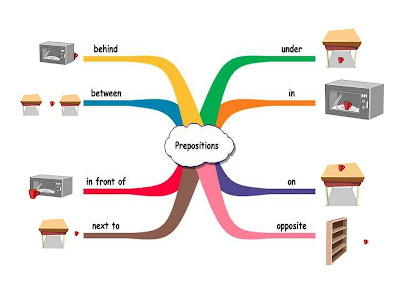
- Recuerda, por último, las preposiciones de lugar


viernes, 26 de noviembre de 2021

Clase X Inglés III

 -Explicamos la diferencia entre nombres contables e incontables y el uso de, some/any/no, much/many/a lot of y how much/how many:


  • Countable and uncountable nouns. 
Los nombres contables son aquéllos que se pueden contar y pueden ir en singular o plural.

Boy/boys, car/cars, house/houses, person/people

Los nombres incontables son aquéllos que no se pueden contar y sólo aparecen en singular
salt / water / cheese / milk

Los nombres de alimentos que se suelen comer en porciones, normalmente, son incontables en inglés, aunque en castellano sí se pueden contar:
ham (jamón)/cheese (queso)/bread (pan)/ice-cream (helado)
  • SOME / ANY (unos, unas o, a veces, no se traducen) Se usan delante de nombres contables en plural o de nombres incontables. SOME, en frases afirmativas;(EN ALGUNAS PREGUNTAS QUE IMPLICAN UNA INVITACIÓN TAMBIEN SE USA SOME) ANY, en frases negativas e interrogativas
I've got some money / I haven't got any money / Have you got any money?
There are some apples / There aren't any apples / Are there any apples?
Would you like some water? (invitación)
  • El determinante NO tiene la capacidad de hacer negativa una frase cuando el verbo está en afirmativa. 
I have no money = I haven't got any money
There are no people in the office = There aren't any people in the office
  • Much/Many/A lot of (muchos) - Much se use con nombres incontables y many con numbers contables y a menudo ambos se usan en frases negatives.
          A lot of se usa con contables y con incontables y, a menudo, en frases           afirmativas e interrogativas.
She has a lot of money // She hasn't got much money
I saw a lot of different animals // I didn't see many animals
  • HOW MANY/ HOW MUCH. Estos dos interrogativos significan "cuánto/s". HOW MUCH se us a con nombres incontables y HOW MANY con nombres contables.
How many children are there? // How much sugar is there?

Practica: some/any/no
Practica:
- Fill in the gaps with SOME, ANY or NO:
  • Mary doesn't like _________ sports
  • He bought _________ eggs. We can't bake the cake
  • There isn't _________ people in the queue 
  • There were ________ people at the bus atom
  • Would you like ________ice-cream?
  • Are there _________ fruit in the fridge?

Clase XII - Inglés 3º - 18 de mayo

 Ejercicios de repaso para el examen de inglés de 3º PRIMER PARCIAL   1.- FILL IN THE BLANKS WITH THE VERBS IN BRACKETS. USE THE PRE...